A self discovery retreat is a few days away from your routine, with guided practices, time in nature and a group, set up so you can rest and look at your life more clearly. It is not therapy and it does not hand out answers. What it gives you is the time and the quiet that daily life rarely leaves room for.
This guide explains what a self discovery retreat is, seven signs your life may be asking for one, how to choose a retreat in Brazil (where many include plant medicine and many don’t) and what a week at the Unah Retreat, by the sea in Bahia, is like.
What is a self discovery retreat?
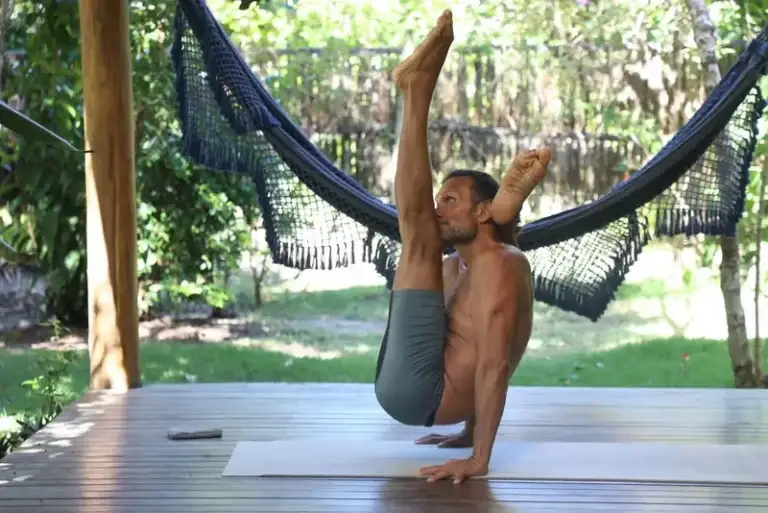
A self discovery retreat is a stay of a weekend to a week, away from home and work, built around practices that help you notice how you feel and what you want to change: yoga, meditation, talking circles, body practices and time outdoors. Unlike a holiday, the days follow a program. Unlike therapy, the focus is on experience and rest, not treatment.
The format changes a lot from place to place. Some retreats are religious and some are secular. Some keep long periods of silence. Some, especially in Brazil, include ayahuasca or other plant medicines. Knowing which kind you want is the first decision.
7 signs you may need a self discovery retreat
1. You feel tired even after you rest
Weekends and holidays come and go, and the tiredness stays. When rest stops working, the problem is often the rhythm itself. A few days with a different routine give you enough distance to see that rhythm from the outside. Research points in the same direction: Harvard Health reports on a review of studies suggesting that mindfulness meditation may help ease anxiety and mental stress.
“I found the welcome and guidance I needed to access my emotions, pains and joys, with a lot of love and respect. I left nourished, strong, full of life.”
Ludmila, Google review (translated from Portuguese)
2. The same questions keep coming back
The same argument, the same doubt about work, the same pattern in relationships. A retreat will not solve these questions for you, but talking circles and quiet time make them harder to avoid. A 2011 study in Psychiatry Research: Neuroimaging observed changes in gray matter density in brain regions linked to learning, memory and emotion regulation after an eight week mindfulness program. It was a small study, but it helps explain why practice can change how we respond to old patterns.
“It was enriching and challenging. It was not easy at all to go down into my basement and open the drawers that touch my soul. But hearing others talk about themselves was also a constant lesson.”
Isabel, Google review (translated from Portuguese)
3. You have lost touch with nature
Many people spend whole weeks between home, car and office. A study of almost 20,000 people in England, published in Scientific Reports in 2019, found that those who spent at least 120 minutes a week in nature were more likely to report good health and wellbeing. It shows an association, not a cause, but it matches what people describe after days by the ocean or in the forest.
“An incredible place, immersed in magnificent nature. Everything was very beautiful, deep and transformative.”
Alliny, Google review (translated from Portuguese)
4. You never have silence
Notifications, meetings, background noise. Silence is where you can hear what you think, and it has become rare. Many retreats set aside time without phones or conversation. If that is the part that draws you most, read about the silent retreat in Brazil.
“A deep dive into myself, in an atmosphere of tranquility, peace and reflection.”
Diego, Google review (translated from Portuguese)
5. Your relationships feel rushed
Short conversations, little time to listen, friendships kept alive by messages. On a retreat, people share meals, practices and circles for several days in a row, and bonds form fast. Arriving alone is normal: at the Unah Retreat, 7 in 10 participants arrive on their own.
6. Your body is asking for care
Poor sleep, tension in the shoulders, meals eaten in front of a screen. A retreat with daily movement, regular meals and early nights gives the body a break from the usual pace. It is not a treatment: if you have a health condition, talk to your doctor before you go.
“Think of food worthy of top chefs. Very cozy rooms and amazing people guiding our journey.”
Graciela, Google review (translated from Portuguese)
7. You want your days to mean more
Work and routine take up all the space, and the question of what you actually want keeps getting postponed. A retreat does not give you a purpose. It gives you a week to think about it without interruption.
“The immersion was deep and made me reflect on how we are living. As soon as I can, I’ll come back for another one.”
Tatiana, Google review (translated from Portuguese)
Unah Retreat
7 days of reconnection by the sea
A self-discovery retreat in Piracanga Ecovillage, Bahia, with yoga, meditation, nature and plant-based food.
Discover the retreatHow to choose a self discovery retreat
Decide on the format before you look at photos. These questions help you compare retreats in Brazil or anywhere else:
- Religious or secular? Some retreats follow a religion or a spiritual tradition; others welcome any belief. Read the description and ask.
- Plant medicine or not? In Brazil, many retreats sold as self discovery include ayahuasca ceremonies. If that is not what you want, look for a retreat that says clearly that there is no plant medicine.
- How long? A weekend is a pause. A week lets you slow down and settle into the rhythm.
- Who leads it? Look for facilitators with names, backgrounds and a clear role in the program.
- Can you go alone? Ask how the group is formed and how people who arrive alone are welcomed.
- Which language? Abroad, ask whether the activities are translated and how.
- What is included? Check accommodation, meals, transfers and what is paid separately. Our guide on how much a spiritual retreat costs in Brazil shows what usually goes into the price.
- What do past participants say? Read independent reviews, such as those on Google, not only the sales page.
Self discovery, yoga, silent or plant medicine retreat: what is the difference?
The names overlap, but each format puts something different at the center.
| Type of retreat | At the center | Good for |
|---|---|---|
| Self discovery retreat | Your life, emotions and choices, through a mix of practices, circles and time in nature | People at a turning point or tired of living on autopilot |
| Yoga retreat | Daily yoga classes, often with meditation | People who want to start or deepen a practice (see yoga retreat for beginners) |
| Silent retreat | Long periods without speaking, usually with meditation | People who want stillness above all |
| Meditation retreat | Several meditation sessions a day | People curious about the effects of practice (see meditation retreat in Brazil) |
| Plant medicine retreat | Ceremonies with ayahuasca or other substances | Only people who are looking for this specifically, after checking health and legal aspects |
What is the Unah Retreat like?
The Unah Retreat is a seven day retreat, from Sunday to Saturday, at Unah, the retreat center inside the Piracanga Ecovillage, on the Maraú Peninsula in southern Bahia. It is not tied to any religion and there is no plant medicine or ayahuasca. More than 2,500 participants have taken part, and no experience with yoga or meditation is needed.
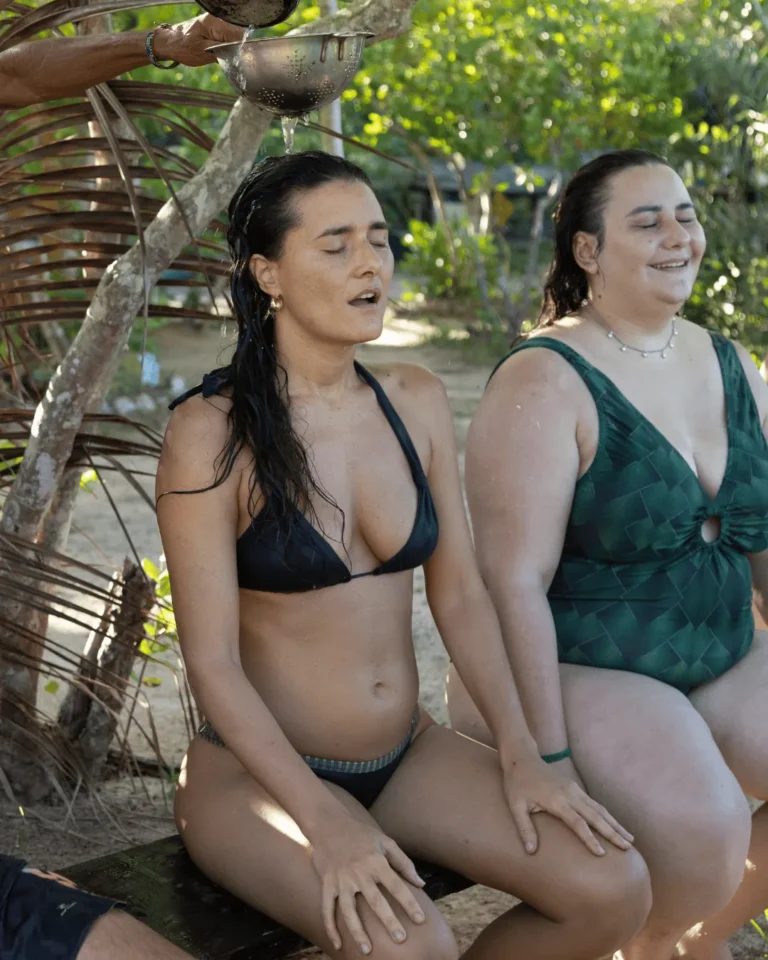
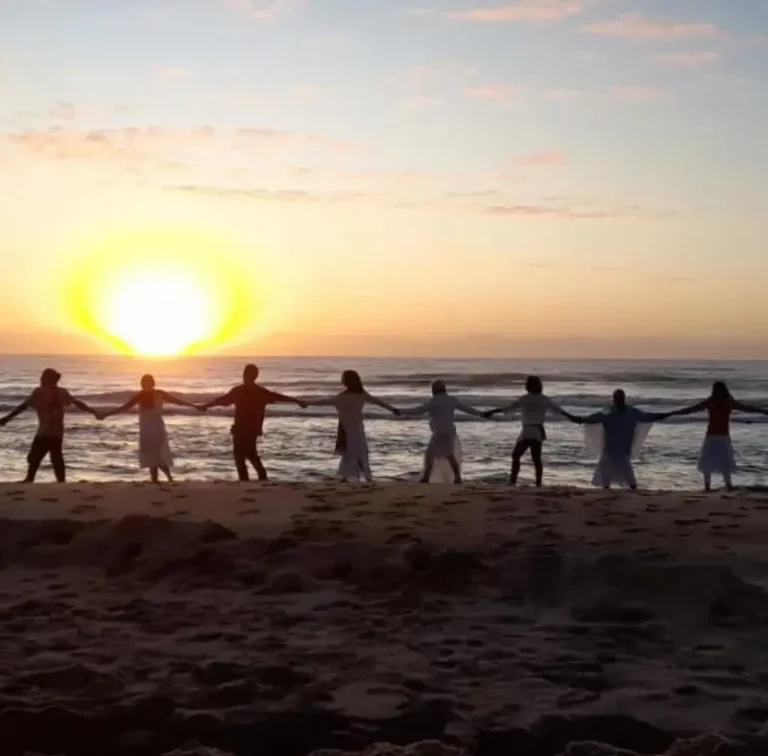
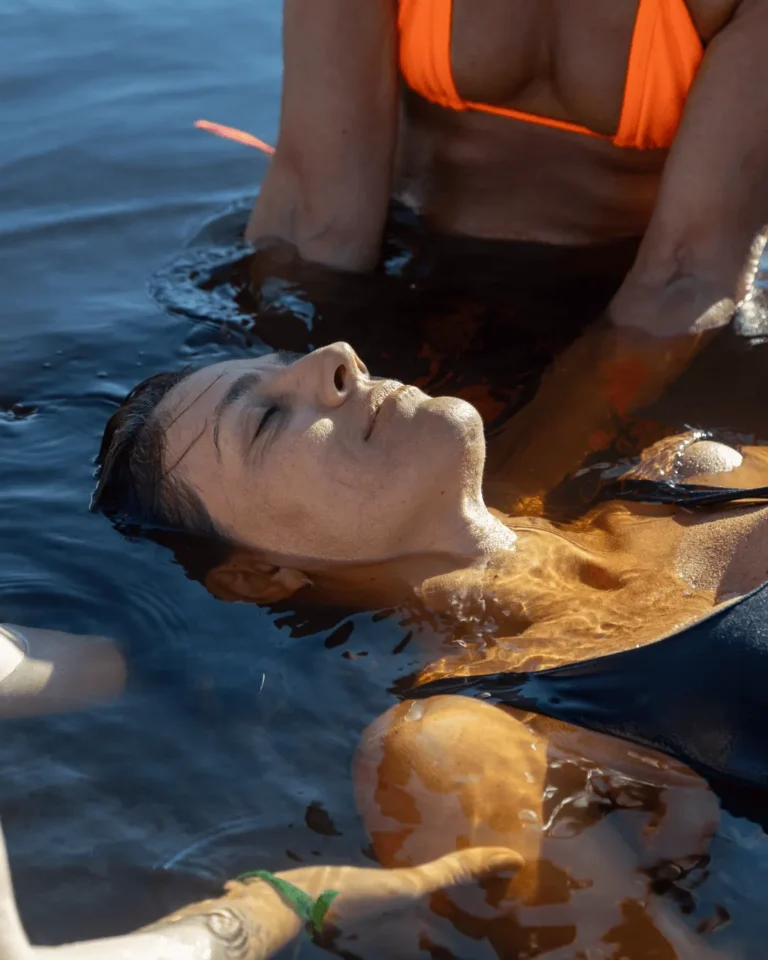
The days have a simple rhythm. Yoga at 6:30 every morning, then breakfast, lunch and dinner, all vegan, at Karuh, the Unah restaurant. An example week includes a river bath, the Elemental Sauna, a medicinal mud bath (weather permitting), a mantra circle on Wednesday with the Axé Mantras band and a sunrise on the beach before leaving. Afternoons and some evenings are free for the ocean, the river, rest or therapies, which are booked and paid separately. There is also a period offline and in silence during the week. The program changes from week to week and with the weather.
The group is hosted by Rapha Simões and Mara Sousa, with Fred Behrends as pedagogical coordinator and Dani Bruce, who has taught yoga for more than 20 years and leads the Sun Salutation at sunrise. Learn more about the Piracanga ecovillage.
- Translation: a personal translator provides translation into English in real time whenever it is needed.
- Transfer: a shared round trip transfer from Ilhéus Airport (IOS) or Itacaré is included. Ilhéus is about 2 hours away by road; see how to get to Unah.
- Rooms: six categories, from a bed in a shared dormitory to private suites. Every bed has a mosquito net.
- Staying connected: free Wi-Fi in the common areas; mobile signal in the ecovillage is limited.
- Age: the minimum age is 16.

Unah Retreat
7 days of retreat at Unah
A week between the ocean, the river and the Atlantic Forest on the Maraú Peninsula, Bahia, to look at your life with calm. Nature, a welcoming group, 100% plant-based meals and an English translator whenever translation is needed.
See upcoming datesIf you would rather start the year this way, Unah also runs a New Year’s retreat in Brazil. To compare all formats and dates, see the wellness retreats in Brazil at Unah.
FAQ about self discovery retreats
Do I need experience with meditation or yoga?
No. A good self discovery retreat is designed for people who have never meditated. At the Unah Retreat, many participants are on their very first retreat, and the yoga is adapted to every level.
Can I go to a self discovery retreat alone?
Yes. Shared meals and group activities make it easy to meet others. At the Unah Retreat, 7 in 10 participants arrive on their own.
Is a self discovery retreat religious?
It depends on the retreat. Some follow a religion or a spiritual tradition, others are secular. The Unah Retreat is not tied to any religion and welcomes people of any belief.
Is there ayahuasca or plant medicine at the Unah Retreat?
No. There is no plant medicine and no ayahuasca at the Unah Retreat. The week is built on nature, body practices, meditation, music and time with the group.
How long should a self discovery retreat be?
A weekend works as a pause. A full week gives you time to arrive, slow down and notice what changes, which is why many retreats, including the Unah Retreat, last seven days.
Do I need to speak Portuguese at the Unah Retreat?
No. The retreat runs in Portuguese, and participants who don’t speak it have a personal translator who translates in real time whenever it is needed. Details are on the Unah Retreat page.
Unah Retreat
7 days of retreat at Unah
A week between the ocean, the river and the Atlantic Forest on the Maraú Peninsula, Bahia, to look at your life with calm. Nature, a welcoming group, 100% plant-based meals and an English translator whenever translation is needed.
See upcoming dates